
The summer heat in Baltimore is brutal for residents and homes alike. A Baltimore attic under dark shingles soaks up the sun and can often reach 140°F. In a vented attic with AC ductwork running through it, this means the AC has to fight the overheated attic all summer to keep the house cool. Every cooled cubic foot pushed through the steaming attic leaks money, so fighting attic heat adds real cost during the weeks that bills peak.
We will explore how to better understand attic ductwork in summer heat and two proven fixes for combatting it: burying the ducts in attic insulation or conditioning the attic at the roofline. In Baltimore’s humid Zone 4A climate, buried ducts in attic insulation need spray foam encapsulation first, and that step is specialist ductwork outside the insulation trade. That caveat is why most contractors and homeowners choose the roofline fix instead.
Consider scheduling a free estimate with a trusted professional to evaluate which of the two paths fits your home project.
Why a Vented Attic Punishes Ducts All Summer
While the attic temperature in summer inside a vented attic with dark shingles reaches 140°F, the attic’s dew point stays roughly in line with outdoor humidity. That combination risks “duct sweating”, where condensation forms because thermal and vapor barriers are not aligned to a home’s air duct length.
Duct leakage is a double hit on a homeowner’s utility bill due to uncontrolled conditioned air escaping to the outdoors and the air leaks that drive infiltration. Roughly 10% duct leakage is typical in code-built homes, while sealed, insulated ducts can cut utility bills by 20%. That math aligns with air conditioning’s share of a home’s power bill.
Here in Maryland, our state follows the Maryland Building Performance Standards, based on the 2021 International Energy Conservation Code (IECC). Every county except Allegany and Garrett falls under Climate Zone 4A in Maryland. This is a mixed-humid designation that affects duct and insulation specifications for homes and buildings.
Option 1: Bury the Ducts in Attic Insulation
For this option, ducts are laid in direct contact with the ceiling or truss lower chords, then covered with the same blown-in, loose-fill attic insulation used across the rest of the attic floor. Prep comes first through an HVAC contractor who seals and insulates ductwork with R-8 or higher duct insulation and mastic-sealed connections. The run also needs a leakage test before insulation goes in.

Here is the Baltimore caveat. In humid climates such as ours, ducts must be encapsulated with spray foam over ductwork before burial. That encapsulation entails specialist ductwork often outside an insulation contractor’s scope. Burial is a strong fix once a specialist has sealed and encapsulated the ductwork, but on its own it covers only half the job here.
That is why so many Baltimore jobs point toward the second option instead. Blown-in insulation like loose-fill fiberglass insulation still plays a role in either approach, since the attic floor needs proper coverage beyond the ductwork too.
Option 2: Condition the Attic at the Roofline
This fix moves the thermal boundary instead of moving the ducts. Sealing and insulating at the roofline turns the attic into an unvented, conditioned attic Baltimore homeowners can rely on year-round. When an unvented assembly is created with the HVAC in the attic, energy loss is reduced, and the attic is made more efficient because it moves the ducts and air handler inside the thermal envelope.
What Makes It Work Safely
An unvented attic Maryland assembly works safely when air-impermeable insulation, such as closed-cell spray foam insulation at the roof deck, keeps interior moisture off the coldest surface in the assembly. Before sealing, confirm combustion safety for fuel-burning equipment and plan for code-compliant mechanical ventilation.
When This is the Right Call
This is the strongest fit when the air handler lives in the attic, the ceiling geometry is complex and rules out a clean duct burial, or the homeowner wants protected storage space.
Burial best fits homes where a specialist has already sealed and encapsulated the ductwork. Conditioning the attic is the strongest call when the air handler is up there too and is best handled by professional attic insulation services.
Frequently Asked Questions
Should attic ducts be buried in insulation?
That is one option, once an HVAC specialist has prepped them with mastic-sealed connections and R-8 duct insulation. The ducts should also pass a leakage test. In Baltimore’s humid zone 4A, they need spray foam encapsulation first too.
Can you spray foam over ductwork?
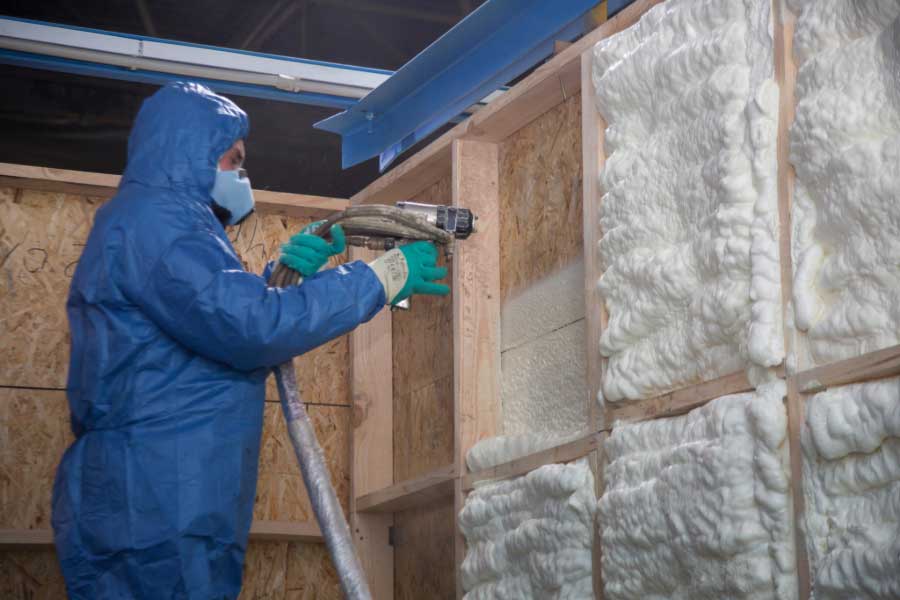
Technically yes, with at least 1.5 inches of closed-cell foam. But that is considered specialist ductwork outside an insulation contractor’s scope. Conditioning the attic gets the ducts inside the envelope without touching them.
How hot does an attic get in a Baltimore summer?
A vented attic under dark shingles can hit 140°F. And with the dew point temperature in the attic matching the outdoor temperature, that heat creates real condensation risk on cold ducts.
Does sealing and insulating attic ducts actually save money?
Yes, sealed, insulated ducts can cut utility bills by up to 20%. With air conditioning accounting for about 19% of a home’s electricity use, the summer is when that fix pays off fastest.
Is a conditioned attic worth it in Maryland?
The strongest case for a conditioned attic is when HVAC equipment lives in the attic, since efficiency gains outweigh the larger insulated area. Ventilation and combustion-safety rules still apply.
The Bottom Line for Your Next Attic Job
The fix is never just more attic insulation. It means getting the ducts inside the thermal envelope, either by burying them with a specialist’s encapsulation or by conditioning the attic at the roofline. Summer is the ideal time to act because the penalty peaks in July and August. This means the payoff shows on the very next cooling season’s bills.
If you are speccing a retrofit or new build in the Baltimore area, DeVere Insulation can walk the attic with you and put together a free estimate for either path. Our expert team of installers specializes in both blown-in and spray foam insulation for residential attics throughout Baltimore and its surrounding communities. Call us at 410.360.6900 or contact us today to schedule a walkthrough for your next Baltimore-area project.
References
Insulation Institute. “Maryland Building Performance Standards.” North American Insulation Manufacturers Association, https://insulationinstitute.org/wp-content/uploads/2025/05/N103-MD-Energy-Code-0425.pdf.
Maryland Energy Administration. “Building Codes.” Maryland Energy Administration, https://energy.maryland.gov/pages/policy-energy-codes.aspx.
Maryland Energy Administration. “Your Home and the Energy Code.” Maryland Energy Administration, https://energy.maryland.gov/documents/yourhomeandtheenergycode.pdf.
Pacific Northwest National Laboratory. “Duct Sealing and Insulation.” Building America Solution Center, U.S. Department of Energy, https://basc.pnnl.gov/home-improvement-expert/checklists/duct-sealing-and-insulation.
Pacific Northwest National Laboratory. “Ducts Buried in Attic Insulation and Encapsulated.” Building America Solution Center, U.S. Department of Energy, https://basc.pnnl.gov/resource-guides/ducts-buried-attic-insulation-and-encapsulated.
Pacific Northwest National Laboratory. “Sealed and Insulated Metal Ducts.” Building America Solution Center, U.S. Department of Energy, https://basc.pnnl.gov/resource-guides/sealed-and-insulated-metal-ducts.
Pacific Northwest National Laboratory. “Vented versus Unvented Attic.” Building America Solution Center, U.S. Department of Energy, https://basc.pnnl.gov/resource-guides/vented-versus-unvented-attic.
University of Maryland Extension. “Home Energy: Insulation.” University of Maryland, https://extension.umd.edu/resource/home-energy-insulation.
U.S. Energy Information Administration. “How Much Electricity Is Used for Air Conditioning in the United States?” U.S. Energy Information Administration, 15 Mar. 2024, www.eia.gov/tools/faqs/faq.php?id=1174&t=1.