Updated March 2026

Whether you’re a Baltimore builder trying to protect your margins or a homeowner tackling a weekend upgrade, installing insulation yourself can look like an easy win. Buy the material. Put it in place. Save on labor. Right?
The problem is what you don’t see.
Without proper training, equipment, and knowledge of Maryland insulation building codes, DIY insulation work can pose serious safety risks, lead to code violations, and cause long-term performance problems. It can lead to gaps and moisture issues that cost more to fix than hiring a pro from the start.
Trusting a professional to ensure correct insulation installation is critical to achieving real energy savings and preventing moisture issues. In other words, proper insulation installation isn’t optional if you want quality results.
Let’s explore the three critical reasons to leave insulation installation to the professionals- safety, installation quality, and true cost efficiency. Then you can make an informed decision about what’s best for your Baltimore-area building project or home.
Not sure if your current insulation was installed correctly? A professional evaluation can identify hidden problems before they turn into expensive repairs.
I. Safety Concerns with DIY Insulation
Health Hazards from Insulation Materials
Many insulation materials require more than basic precautions.
Fiberglass insulation hazards include skin, eye, and respiratory irritation from tiny airborne glass fibers. OSHA requires exposure control during installation. Without proper insulation safety equipment, installers risk ongoing irritation and health issues.
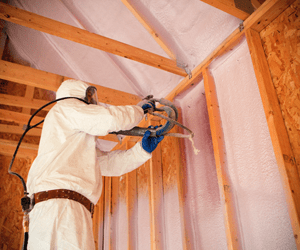 Spray foam insulation safety is even more serious. Spray foam contains chemicals that can cause respiratory sensitization and other long-term effects during installation if applied without proper ventilation and PPE (personal protective equipment). The EPA warns that occupants not using PPC should not be present during application and curing. Without proper ventilation and training, DIY installers can expose themselves and others to unnecessary risks.
A trained professional insulation contractor understands material handling, ventilation requirements, and jobsite containment procedures. DIY installers often don’t.
Fire Risks from Improper Installation
Insulation installed too close to recessed lighting, exhaust flues, or other heat sources creates fire hazards. The Department of Energy recommends maintaining proper clearances around heat-producing fixtures.
Professional insulation contractors are trained to identify clearance requirements and follow fire safety codes that protect your building and its occupants. That kind of training protects your client, your project, and your reputation.
II. Quality and Code Compliance Risks
Installation Errors That Reduce Performance
Even small insulation installation mistakes can have a big impact. Gaps, compression, or misaligned batts reduce thermal performance. Even minor gaps allow heat transfer. Missed areas around pipes, wires, rim joists, and top plates create thermal bridges that can compromise the entire insulation system.
True energy efficiency insulation requires more than filling a cavity. It requires proper fit, correct insulation R-value, and strategic air sealing. The DOE reports that air movement accounts for more than 98% of water vapor movement in building cavities. This makes combined air sealing and insulation critical.
Maryland Building Code Compliance
Maryland follows the 2021 IECC (International Energy Conservation Code), which sets specific insulation R-value and air barrier standards for our climate zone (Zone 4A for the Baltimore area). Failing to meet these requirements can delay approvals and create financial liability during resale.
Professional contractors stay current on insulation building codes in Maryland to ensure your project passes inspection the first time.
Warranty Risks
Many manufacturers require professional installation to maintain the insulation warranty. DIY work can void that coverage completely. When you hire a qualified contractor, you receive manufacturer-backed protection plus workmanship guarantees with their insulation services.
III. The True Cost of DIY Insulation
Hidden Expenses of Self-Installation
Your upfront savings often disappear quickly with DIY installation. Blowing machines, spray rigs, and proper insulation safety equipment are expensive to rent or buy. Ordering the wrong material can lead to waste and rework. Poor installation also increases energy bills. ENERGY STAR estimates that proper air sealing and insulation can save around 15% on homeowners’ heating and cooling costs. When you miss key details, those savings disappear.
Long-Term Damage from Improper Installation
Insulation installed without proper moisture control can lead to mold, wood rot, and structural damage. Ice dams, condensation issues, and pest infestations are also common consequences of improperly insulated attics and crawl spaces. Fixing these issues costs far more than hiring a pro from the start.
High-performance systems like spray foam insulation require precise application to seal air leaks and add R-value in one step. When done correctly, they improve durability and long-term performance. When done wrong, they create expensive headaches.
FAQs
- Why is professional expertise important for energy efficiency?
- Professional expertise ensures precise insulation installation, minimizing gaps and air leaks, which is crucial for maintaining energy efficiency in buildings. Even small installation gaps and compression can significantly reduce insulation’s effectiveness.
- What are signs of improperly installed insulation?
- Signs include drafts, temperature fluctuations between rooms, unusually high energy bills, and visible gaps in insulation.
- Can self-installed insulation affect resale?
- Yes. Non-compliant or poorly installed insulation can raise red flags during home inspections, potentially reducing resale value or requiring costly remediation before sale.
- What are the environmental implications of improper installation?
- Improper insulation leads to increased energy consumption for heating and cooling, contributing to higher greenhouse gas emissions and a larger environmental footprint.
- What types of insulation should be left to professionals?
- Spray foam and blown-in systems require specialized equipment, precise application techniques, and safety precautions. Spray foam chemicals specifically can pose serious health risks without proper handling.
- How do I find a reputable contractor?
- Research local companies, read reviews, and ask for recommendations. Look for contractors with training certifications, knowledge of local building codes, and long-standing community reputations. DeVere Insulation has been delivering exceptional insulation solutions to local homeowners and builders since 1987.
- Does Maryland require specific insulation R-values for new construction and renovations?
- Yes. Maryland’s building code follows the 2021 IECC for Climate Zones 4 and 5, which sets minimum R-value and air barrier standards. A professional contractor will ensure your project meets or exceeds these standards.
Protect Your Project the Right Way
DIY insulation rarely delivers the savings it promises. Safety risks, code violations, performance failures, and long-term damage add up fast. Hiring a professional insulation contractor protects your investment, ensures code compliance, and delivers the energy savings your project was designed for.
DeVere Insulation has been serving Baltimore-area homeowners and builders since 1987. As Maryland’s largest independent insulation contractor, we bring trained crews, code expertise, competitive manufacturer relationships, and peace of mind to every job.
If you’re planning your next build or renovation, don’t take chances with your insulation. Contact us today and ensure it’s done right the first time.
References
American Chemistry Council. (n.d.). Potential health hazards of SPF chemicals. Spray Polyurethane Foam Health + Safety. https://www.spraypolyurethane.org/health-hazards/
ENERGY STAR. (n.d.). Seal and insulate. U.S. Environmental Protection Agency. https://www.energystar.gov/saveathome/seal_insulate
Insulation Institute. (n.d.). Maryland building performance standards- summary of key residential energy code requirements. North American Insulation Manufacturers Association. https://insulationinstitute.org/wp-content/uploads/2025/05/N103-MD-Energy-Code-0425.pdf
Occupational Safety and Health Administration. (n.d.). Synthetic mineral fibers. U.S. Department of Labor. https://www.osha.gov/synthetic-mineral-fibers
Pacific Northwest National Laboratory. (n.d.). Residential energy code status: Maryland. U.S. Department of Energy, Building Energy Codes Program. https://www.energycodes.gov/status/states/maryland
U.S. Department of Energy. (n.d.). Insulation. Energy Saver. https://www.energy.gov/energysaver/insulation
U.S. Department of Energy. (n.d.). Moisture control. Energy Saver. https://www.energy.gov/energysaver/moisture-control