If you plan to build a new home in Maryland, keep in mind that the wall assembly you pick today might not be the best choice next year. Energy codes change, so a project approved now could run into new requirements before construction is done.
Maryland currently follows the 2021 IECC Maryland requirements. The code took effect statewide on May 29, 2023, and local jurisdictions were required to enforce it by May 29, 2024. The Maryland next energy code cycle is still taking shape, with the 2024 IECC under consideration. A separate 2026 proposal covering large commercial and multifamily buildings is on hold while lawmakers review it.
For anyone planning a build around the Maryland new construction energy code, the safest approach is not to wait for the next cycle to be finalized. Wall insulation, continuous insulation, and air sealing are already key parts of the building envelope. Addressing these early can help you avoid redesigns or inspection problems later.
Before you finalize your wall assembly plans, have a residential insulation expert review them. They can flag any questions you may need to discuss with your local building department.
Maryland’s Current Wall Assembly Requirements (2021 IECC Baseline)
Where Baltimore-Area Builders Stand Today
Maryland’s current residential energy-code baseline is the 2021 International Energy Conservation Code with state amendments. The 2021 IECC with Maryland amendments is the state’s current residential energy code.
The 2021 IECC Maryland requirements are the starting point for anyone planning residential wall assemblies today.
Baltimore and the surrounding metro area fall within IECC Climate Zone 4A, a mixed-humid climate zone. This is important because the energy code uses climate zones to set building-envelope requirements, including Climate Zone 4A wall insulation provisions.
The Maryland Building Performance Standards incorporate the IECC into the state’s broader building code structure. For new residential construction, prescriptive envelope requirements cover walls, ceilings, floors, windows, and other parts of the building envelope.
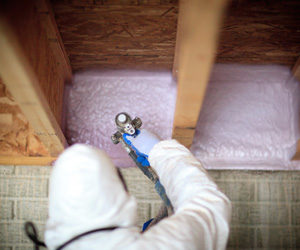
In short, Maryland energy code wall assemblies are not just about picking an insulation product. The whole wall assembly must meet the code requirements for your project.
Local jurisdictions can adopt stricter requirements, but they can’t weaken the state code. Before starting construction, builders should check with the local building department to confirm which requirements apply.
This can help avoid surprises later, since changing an approved wall design could entail revising plans or redoing part of the assembly.
The same build-ahead approach applies elsewhere in a new home, including basement insulation for new Maryland homes. It’s best to handle insulation and envelope details while the assembly is still open, instead of fixing them after the work is finished.
Where Maryland’s Next Energy Code Cycle Is Headed
2024 IECC Adoption Efforts and a Regulation Currently on Hold
Maryland’s current code is set, but the next updates are still in progress.
Maryland isn’t the only state moving toward the 2024 IECC. Other Northeastern states, including Connecticut, Delaware, Maine, Massachusetts, New Jersey, and New York, are also updating their energy codes.
For builders, this puts IECC 2024 Maryland guidelines on their radar. However, Maryland hasn’t finalized new requirements for residential low-rise walls under the 2024 code yet.
In 2026, Maryland proposed regulations for large commercial and multifamily buildings. Some climate and efficiency advocates criticized the proposal as less stringent than the 2024 IECC baseline it’s supposed to follow.
Among the disputed changes, the proposal would remove the on-site renewable-energy requirement for certain large new buildings and allow builders to count some efficiency measures in more than one way.
The building industry has a different concern. Industry leaders say the added flexibility could ease cost pressures after what they called a difficult transition during the 2021 code cycle, especially with insulation compliance.
In August 2026, a joint legislative committee put the proposed regulation on hold and asked the state to delay a final decision while lawmakers study the changes further.
This hold only affects the proposed rules for large commercial and multifamily buildings. It doesn’t change Maryland’s current residential energy code or create a new standard for residential wall insulation.
The next residential low-rise code cycle still requires separate formal action.
Because of this, builders shouldn’t assume that every headline about Maryland new construction energy code changes applies to single-family homes or other low-rise residential projects.
For now, the 2021 IECC requirements remain the baseline for residential projects. Based on Maryland’s previous code cycle, local jurisdictions have historically had about 12 months after state adoption to implement local amendments and enforcement. However, the timing for the next cycle has not yet been finalized.
What This Means for Your Wall Assembly Planning Now
Building Ahead of the Curve
No one knows exactly what Maryland’s next residential wall requirements will be. But that doesn’t mean builders need to stop planning.
Continuous insulation and reducing air leakage remain important from one IECC cycle to the next. Builders reviewing continuous insulation Maryland requirements should also plan for air sealing wall assemblies during the design stage, rather than trying to predict a future R-value or code date.
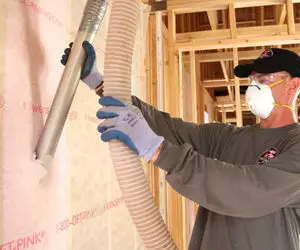 Maryland’s current code allows cavity insulation, continuous insulation, or a combination of the two, depending on your wall assembly. A wall insulation specialist can help you decide which option is best for your project, instead of using the same approach for every wall.
Before breaking ground, check with your local building department to see whether any adopted local amendments to the 2021 IECC affect your wall assembly. It’s also a good idea to have a residential insulation contractor review the assembly before installing drywall. This way, you can fix insulation or air-sealing details while they’re still easy to reach.
Air sealing is important, too.
Even with insulation in place, air can still leak through gaps around wiring, plumbing, and framing. Completing air sealing while the walls are open is much easier than fixing those gaps after drywall is up.
In existing homes, air sealing and adding insulation can save homeowners an average of about 15% on heating and cooling costs. For new builds, tackling both from the beginning gives the wall assembly a better chance to perform as designed instead of correcting leaks after the home is finished.
This approach also works for the rest of the building envelope. Walls, basements, and insulation in new construction attics all give builders a chance to address insulation and air leaks before those areas are closed.
Builders should follow the current code and check for any local amendments before construction starts. When planning your wall assembly, keep insulation continuity and air sealing in mind from the beginning.
Frequently Asked Questions
What energy code does Maryland currently use for wall insulation?
Maryland currently follows the 2021 IECC Maryland requirements with state amendments. The code took effect on May 29, 2023, and local jurisdictions had to begin enforcing it by May 29, 2024. That remains the wall insulation code Maryland builders must use today, along with any stricter local amendments.
Is Maryland adopting the 2024 IECC?
Maryland is actively pursuing the adoption of the 2024 IECC, so builders should continue to watch the IECC 2024 in Maryland. The next residential low-rise requirements have not yet been finalized. A related 2026 proposal for large commercial and multifamily buildings was placed on hold in August pending further legislative review.
What climate zone is Baltimore in?
Baltimore is in IECC Climate Zone 4A, which is classified as mixed-humid. The climate zone helps determine building-envelope requirements, including climate zone 4A wall insulation provisions.
Does new construction in Maryland have to meet the current energy code for wall insulation?
Yes. The 2021 IECC prescriptive envelope tables govern wall assemblies for new residential construction in Maryland. These requirements are part of the Maryland Building Performance Standards, and builders must also follow any stricter local amendments that apply to the project.
Do newer code cycles always require more wall insulation?
Not necessarily. The 2021 IECC improved energy efficiency over the 2018 cycle, but a newer code does not automatically mean more wall insulation. Maryland’s 2026 proposal for large buildings has even drawn criticism for being less strict than parts of the 2024 model code. Builders should follow the code adopted for their project instead of trying to predict what the next cycle will require.
Plan Your Wall Assembly Before Construction Starts
Maryland’s current wall assembly baseline is clear: the state uses the 2021 IECC with Maryland amendments, and Baltimore is in Climate Zone 4A. What comes next is still being worked out.
For builders and homeowners planning new construction, it’s smart to address continuous insulation and air sealing now, regardless of what the next code cycle brings. Checking these details before the walls are closed makes it easier to fix any problems while you still have access.
If you’re planning a new home, DeVere Insulation can review your wall insulation scope before construction goes too far. Request a free estimate before finalizing your plans.
References
Alliance to Save Energy. IECC Compliance Guide for Homes in Maryland. Alliance to Save Energy, www.ase.org/sites/ase.org/files/maryland_2015_iecc.pdf.
Building Codes Assistance Project. “Maryland Current Building Codes.” BCAP, bcapcodes.org/code-status/state/maryland/.
Condon, Christine. “Climate Groups Concerned by Proposed Maryland Building Code.” Maryland Matters, 17 July 2026, marylandmatters.org/2026/07/17/maryland-building-code-concerns-energy-efficiency/.
Condon, Christine. “Legislative Committee Puts New Maryland Building Code on Hold Amid Environmental Concerns.” Maryland Matters, 6 Aug. 2026, marylandmatters.org/2026/08/06/maryland-building-code-on-hold/.
Harford County Government. “Energy Code.” Harford County, MD, www.harfordcountymd.gov/3775/Energy-Code.
Institute for Market Transformation. “2026 Energy Codes Outlook.” IMT, 17 Feb. 2026, imt.org/news/2026-energy-codes-outlook/.
International Code Council. “Maryland.” ICC, www.iccsafe.org/advocacy/adoptions-map/maryland/.
Maryland Energy Administration. “Building Codes.” Maryland.gov, energy.maryland.gov/pages/policy-energy-codes.aspx.
U.S. Department of Energy, Building Energy Codes Program. “Maryland.” Energycodes.gov, www.energycodes.gov/status/states/maryland.
U.S. Environmental Protection Agency. “Methodology for Estimated Energy Savings from Cost-Effective Air Sealing and Insulating.” ENERGY STAR, www.energystar.gov/saveathome/seal_insulate/methodology.
U.S. Environmental Protection Agency. “Why Seal and Insulate?” ENERGY STAR, www.energystar.gov/saveathome/seal_insulate/why-seal-and-insulate.